
“Is this plastic, Mum?”
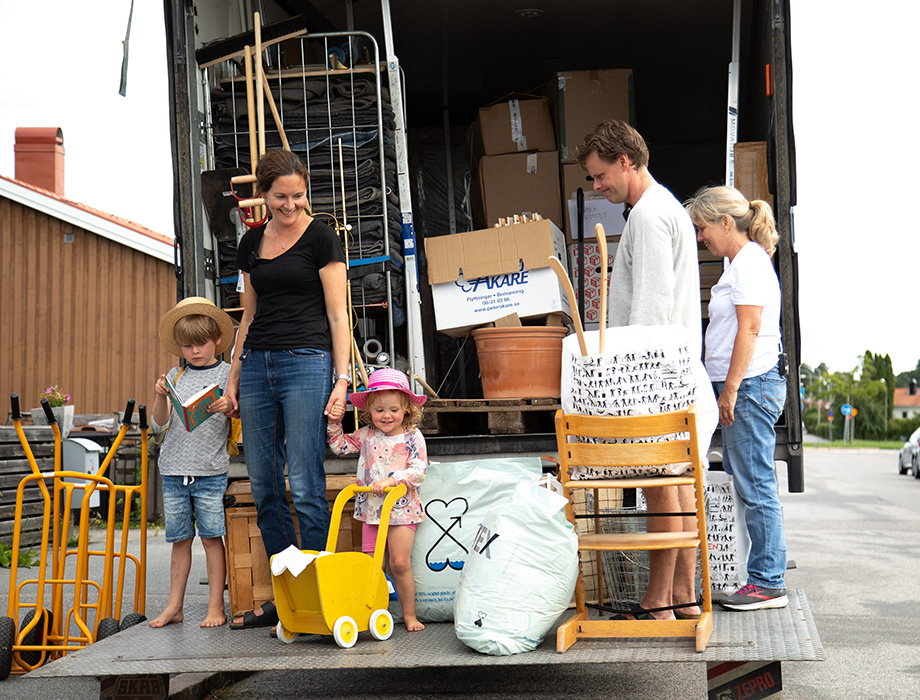
In a single day, the Hesse family’s home in the Stockholm suburb of Tallkrogen was stripped of almost everything. Sofas, beds, toys and kitchen utensils were carried out onto the lawn. When the plastic was gone, Emelie Hesse stood in the middle of her own everyday life — now transformed into a research project.
What made you decide to take part in the experiment?
“Curiosity, and a desire to learn more about how to live more sustainably in everyday life, especially when it comes to consumption. It feels important to share that knowledge with others.”
What were you worried about beforehand?
“That the children would miss the things we got rid of, and that the replacement items wouldn’t suit us in terms of function or design. But it turned out really well – especially the toys, which genuinely stimulated the children’s creativity.”
What was it like to live without your usual belongings?
“Overall, it was very pleasant. We realised how much we had accumulated over time – things we weren’t actually using. It was often easier than expected to change habits, like boiling water on the stove instead of using a kettle, or managing with one vacuum cleaner instead of three.”
What was the most challenging part?
“Since most items could be replaced – often with better alternatives – it wasn’t difficult, but it did require some adjustment. Hygiene products were the biggest challenge, such as using toothpaste tablets instead of regular toothpaste. In the long run, it would also have been hard to do without certain kitchen appliances like electric whisks, kettles and blenders. And living completely without polyester or fleece during winter.”
“Another issue is office chairs. Modern plastic desk chairs are often more ergonomic and comfortable. There’s clearly room for development there.”
Did you notice any change in what the children did?
“They drew a lot more. We all noticed how better-quality drawing materials made it more enjoyable to create. They’ve also become more aware in shops: ‘Is this plastic, Mum? Should we really buy it then?’”
What was the most positive aspect?
“The experience as a whole. It was a real kick-start to living more sustainably and at the same time clearing our home of unnecessary things.”
What have you taken with you from the experiment?
“We try to choose natural materials whenever possible, even though we still have some plastic toys. We also give friends and acquaintances tips on easy replacements. The kitchen and bathroom are good places to start, for example wooden chopping boards, shampoo bars and bar soap instead of bottles.”